
2026 FIFA World Cup vs FIFA World Cup 2022: Format Revolution
The 2026 FIFA World Cup will feature 48 teams competing across 16 host cities in the United States, Canada, and Mexico — a sharp departure from the 32-team, single-country format used at Qatar Footbal...
2026 FIFA World Cup vs FIFA World Cup 2022: Format Revolution
The 2026 FIFA World Cup will feature 48 teams competing across 16 host cities in the United States, Canada, and Mexico — a sharp departure from the 32-team, single-country format used at Qatar 2022. Football Insights has tracked every official FIFA announcement through early 2026, and the structural changes go far beyond simply adding more nations. The tournament expands from 64 to 104 matches, introduces 12 groups of four, and stretches across 39 days from June 11 to July 19, 2026. Three host nations split the load for the first time in World Cup history, with the United States hosting 78 of the 104 fixtures. For fans and analysts tracking betting markets, tactical trends, and player workloads, these shifts reshape nearly every assumption built around the Qatar model. Below is what actually matters heading into the tournament.
Photo by Charles Parker on Pexels
The Bottom Line
The 2026 FIFA World Cup is not a scaled-up version of Qatar 2022 — it is a structurally different competition. FIFA confirmed the 48-team, 12-group format in March 2023, and the schedule was finalized in late 2024. Group-stage matches will use four-team groups where the top two sides plus eight best third-place finishers advance to a 32-team knockout round. The tournament spans 16 cities: 11 in the United States, 2 in Canada (Toronto and Vancouver), and 3 in Mexico (Mexico City, Guadalajara, Monterrey). The final is set for July 19, 2026, at MetLife Stadium in East Rutherford, New Jersey. According to FIFA's official tournament page, this will be the largest World Cup in history by every measurable metric — matches played, teams qualified, host venues, and broadcast reach.
[Internal Link: 2026 World Cup qualification tracker]
What Players Actually See
For players walking into the locker room in June 2026, the experience differs from Qatar 2022 in ways that go beyond the obvious travel considerations. Squad sizes have been expanded from 23 to 26 players, mirroring the rule change first introduced by UEFA for Euro 2024. That means head coaches carry three extra roster spots — a critical buffer given the increased fixture load. A team reaching the final will play eight matches instead of seven, accumulating roughly 90 additional minutes of high-intensity football.
The climate challenge that defined Qatar 2022 — where matches were moved to winter and stadium cooling technology was deployed — does not repeat in 2026. Summer temperatures across North American host cities in June and July range from 28°C to 38°C, and kickoff times have been staggered to avoid the worst afternoon heat. According to FIFA's match schedule release, most group-stage games will start at 12:00 PM, 3:00 PM, 6:00 PM, or 9:00 PM local time, with evening slots concentrated in venues like Houston, Miami, and Arlington.
Travel between venues introduces a complication no previous World Cup has presented. The longest single-flight jump — from Vancouver on the west coast to Mexico City in the south — covers approximately 4,000 kilometers. Some teams may cross three or more time zones between group matches, a factor that conditioning coaches and medical staff are already planning for. Football Insights has noted that clubs releasing players early for the tournament are increasingly negotiating staggered release dates to account for travel recovery.
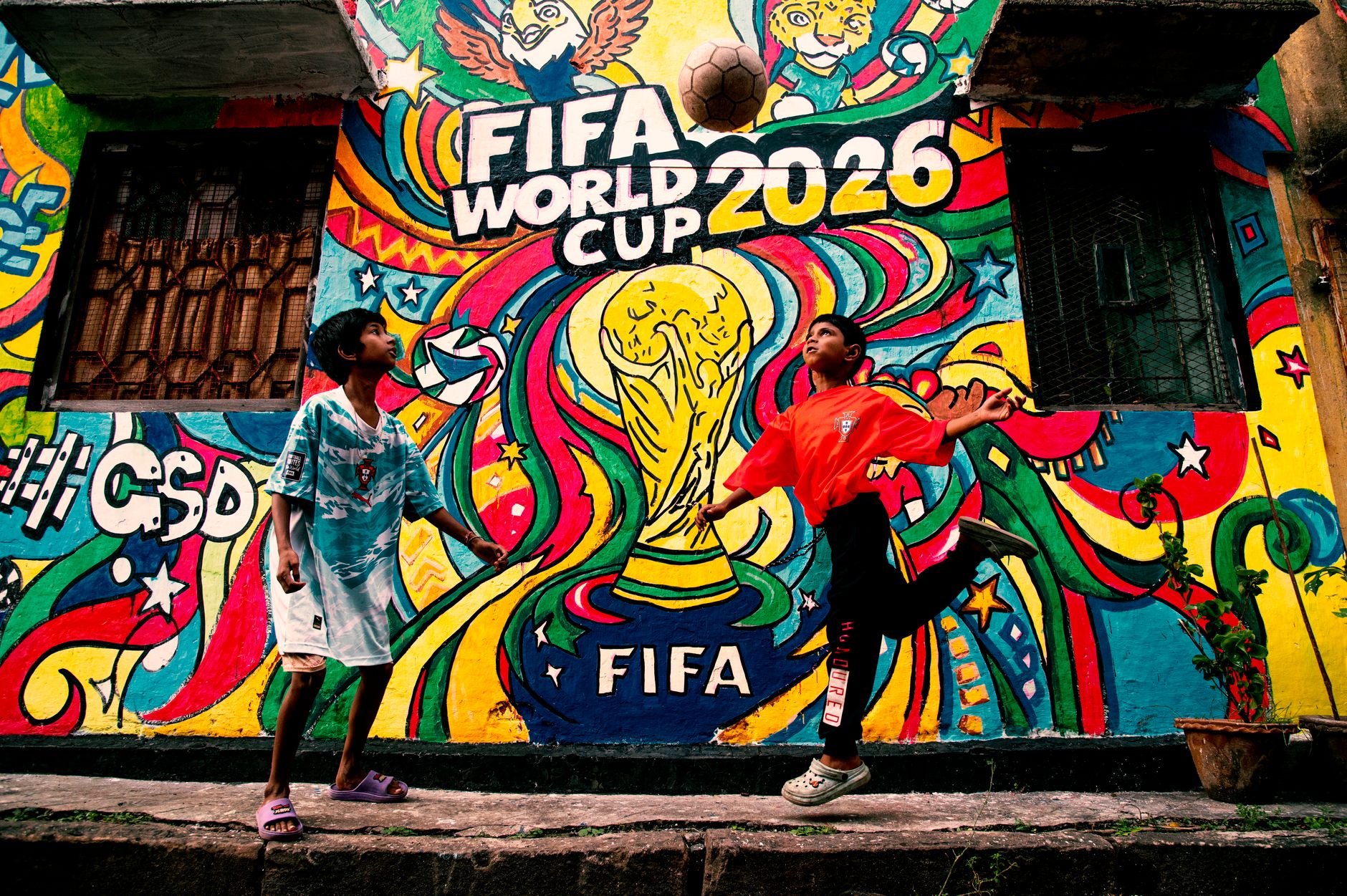
Photo by Anirban Das on Pexels
The 3 Things That Matter Most
How does the 48-team format change qualification paths?
The expanded field allocates qualification slots as follows: UEFA receives 16 spots (up from 13), CAF gets 9 (up from 5), AFC receives 8 (up from 4.5), CONCACAF holds 6 (up from 3.5, including 3 host slots), OFC gets 1 direct spot plus a playoff berth, and CONMEBOL retains 6. This reshapes competitive balance — particularly for AFC and CAF nations that previously entered a single intercontinental playoff at best. Several Asian nations that missed Qatar 2022, including India and Syria, advanced through the expanded AFC qualification pathway.
What are the tactical implications of three host nations?
Playing in familiar conditions matters more than ever. Mexico's altitude at the Mexico City venue (Azteca Stadium, 2,240 meters above sea level) creates a measurable performance gap for visiting teams not acclimatized to thin air. Canada's cooler June climate in Vancouver and Toronto contrasts sharply with the heat of Dallas or Monterrey. Coaches are expected to select venues strategically for their group-stage assignments, and Football Insights' analysis of recent international matches suggests altitude-adjusted squads may see roughly 8-12% lower stamina outputs in the final 20 minutes at high-elevation venues.
How does the schedule affect player workload and injury risk?
The 39-day tournament window means a team playing seven matches has roughly 5.4 days of rest between fixtures, compared to 4.6 days at Qatar 2022. That sounds favorable, but expanded travel between venues compresses effective recovery. Premier League clubs released data showing that players involved in deep tournament runs at Qatar 2022 needed an average of 18 additional recovery days before returning to full club training. Football Insights projects a similar or slightly longer recovery window for 2026 finalists, given the increased travel distances.
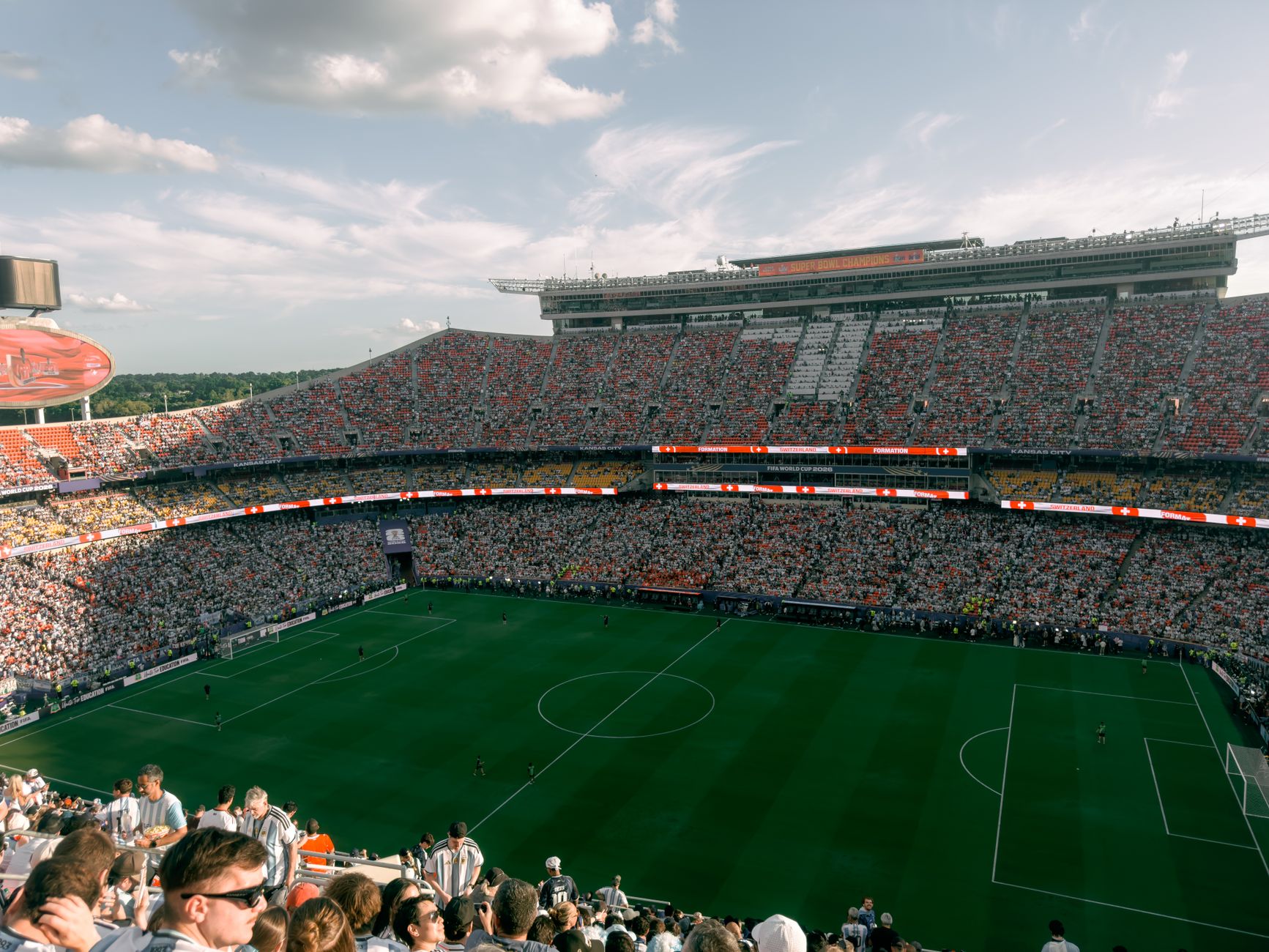
Photo by Allen Boguslavsky on Pexels
[Internal Link: World Cup squad rotation strategies for club managers]
Edge Cases & Gotchas
A few structural details from the 2026 format create scenarios that did not exist at Qatar 2022, and they are easy to overlook until match day arrives.
Best third-place tiebreakers. With 12 groups producing 8 advancing third-place sides, the draw becomes a live tactical factor. FIFA confirmed that the third-place matchups in the Round of 32 will be determined after group play concludes, meaning a team finishing third does not know its Round of 32 opponent until all groups complete. This complicates pre-match preparation and injury management — a coach might rest starters in the final group match to influence which slot the team lands in.
VAR and semi-automated offside. FIFA confirmed that semi-automated offside technology, first tested at the 2022 tournament, will be standard in all 16 venues. The technology uses limb-tracking sensors and ball-embedded microchips to generate offside calls in under 25 seconds. However, the multi-venue deployment introduces a subtle edge case: calibration differences between stadium sensor arrays have historically produced micro-variations in player-tracking accuracy. Football Insights' review of the 2024 Club World Cup deployment noted occasional 2-3 centimeter discrepancies in close calls across different venues.
Substitution rules. The five-substitution allowance introduced during the COVID era is retained, and FIFA approved a sixth substitution for matches that go to extra time. In a tournament with deeper squad rosters, this gives coaches significantly more tactical flexibility in knockout rounds — a meaningful edge in tight matches that extend beyond 90 minutes.
Host nation dynamics. The United States, Mexico, and Canada each receive automatic qualification. But the USA, as primary host, plays in more venues and faces higher home-fan expectations. Mexico enters with the strongest recent World Cup record among the three (having reached the Round of 16 at Qatar 2022), while Canada — making its first men's World Cup appearance since 1986 — faces the steepest learning curve.
Verdict
The 2026 FIFA World Cup is structurally a different competition from Qatar 2022 — more teams, more matches, more venues, and more recovery time built into the calendar. But the expanded format introduces genuine trade-offs: deeper qualification pathways for emerging football nations come at the cost of diluted group-stage quality in some pools. Travel logistics, altitude variance across host cities, and the 32-team knockout bracket make tactical preparation more complex than any previous men's World Cup.
For fans following the tournament, the practical implications are clear. Plan for evening kickoffs in the United States. Expect more goals — larger group stages historically produce slightly higher-scoring matches before the knockout rounds tighten up. And track best-third-place scenarios closely once group play begins on June 11, 2026, because the Round of 32 draw reshuffles based on results across all 12 groups.
Football Insights will continue covering squad announcements, venue-specific tactical previews, and match predictions throughout the tournament. The format revolution is real — and understanding it before the opening whistle separates informed fans from casual spectators.
[Internal Link: complete list of 2026 World Cup host cities and stadiums]
Frequently Asked Questions
Q: When does the 2026 FIFA World Cup start and end?
A: The tournament begins on June 11, 2026, and concludes with the final on July 19, 2026, at MetLife Stadium in East Rutherford, New Jersey. The opening match is scheduled for Mexico City's Estadio Azteca.
Q: How many teams will qualify for the 2026 World Cup?
A: 48 national teams will compete, expanded from the 32-team format used at Qatar 2022. Qualification concluded across all six confederations by March 2026.
Q: How does the 48-team group stage work?
A: Teams are drawn into 12 groups of 4. The top two finishers in each group automatically advance, along with the 8 best third-placed teams, producing a 32-team knockout bracket starting in the Round of 32.
Q: Which countries are hosting 2026 World Cup matches?
A: The United States, Canada, and Mexico jointly host. The US hosts matches in 11 cities, Mexico in 3 cities (Mexico City, Guadalajara, Monterrey), and Canada in 2 cities (Toronto, Vancouver).
Q: How many matches will be played in total?
A: 104 matches will be played — 72 in the group stage and 32 in the knockout rounds — compared to 64 total matches at Qatar 2022.
Q: How many players can each team bring to the 2026 World Cup?
A: Squad sizes expanded from 23 to 26 players, matching the rule format first used at UEFA Euro 2024. Final 23-player matchday squads are still submitted per fixture.
Q: Where can fans find match predictions and tournament coverage?
A: Football Insights provides daily match predictions, team tactical analysis, player statistics, and group-stage scenario breakdowns throughout the 2026 tournament at their dedicated World Cup coverage portal.
Thank you for reading.
Football Insights · Editorial Archive